
Former Argonne nuclear and radiochemical engineer Shayan Shahbazi is opening new research pathways for students interested in nuclear chemical engineering.
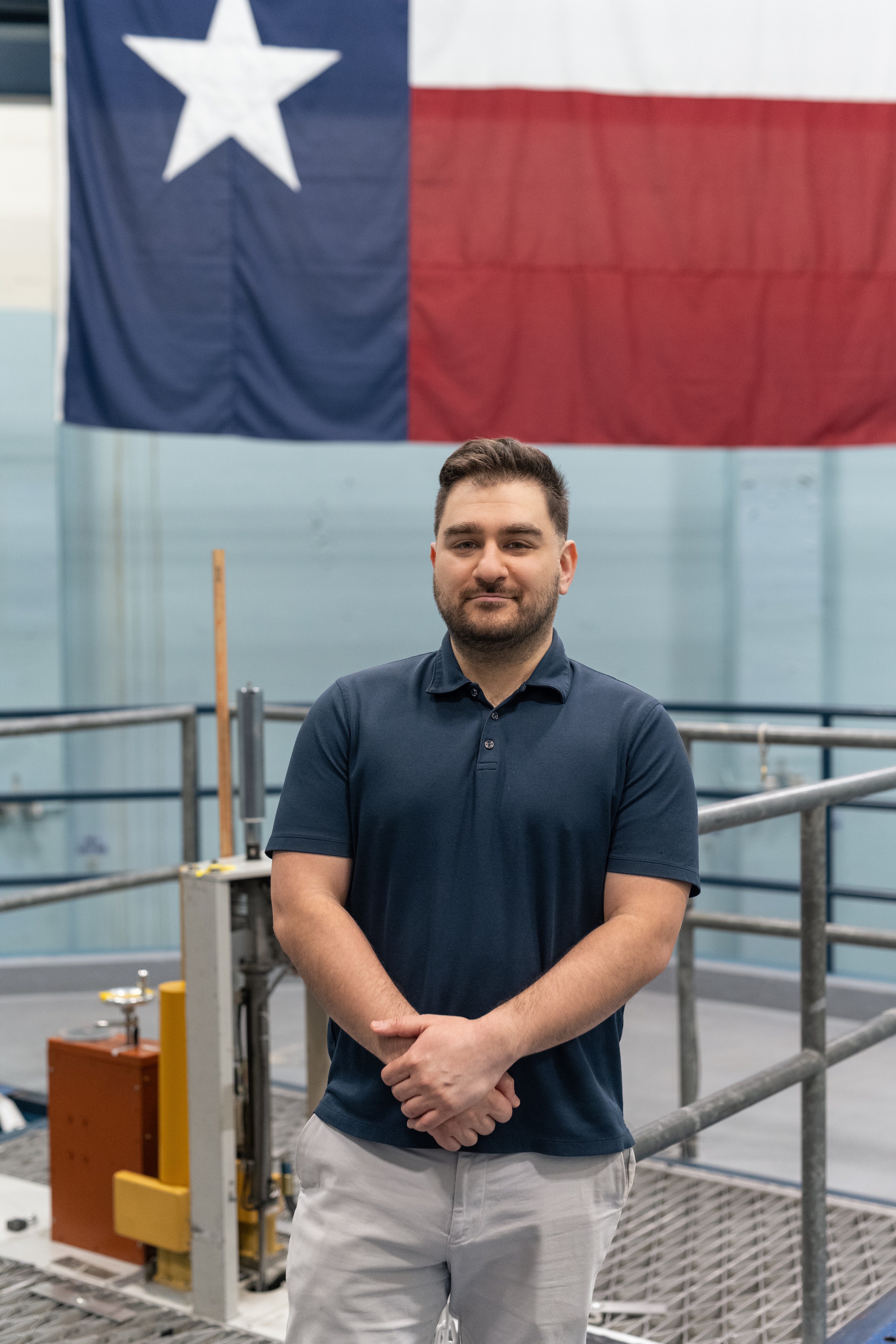
Shayan Shahbazi is a Senior Research Fellow in the Nuclear & Radiation Engineering (NRE) Program at The University of Texas at Austin, specializing in advanced nuclear reactor analysis, with an emphasis on molten salt reactors, radiochemistry, thermodynamics, chemical separations, radionuclide transport, radioisotope production and nuclear forensics.
Prior to joining UT, Shahbazi served as a Principal Nuclear/Radiochemical Engineer at Argonne National Laboratory, where he worked on the safety, security and safeguards analysis of advanced reactors.
Get to know more about Shahbazi through the Q&A below!
Q: What attracted you to nuclear energy research?
A: For me, it’s the fact that nuclear energy is a clean energy source. It’s the only way to produce large amounts of energy without emitting greenhouse gases. And there’s a need for baseload energy—a source of electricity that is always on. Nuclear energy is the best—and only—solution to achieving energy security and decarbonization goals.
Q: What excited you most about joining the University as a Senior Research Fellow?
A: I saw the momentum building in UT’s NRE program, especially in research supporting molten salt reactors by Kevin Clarno and Derek Haas. Similarly, I saw how heavily the State of Texas is investing in nuclear energy and how much it values nuclear workforce development based on its support of the Texas Nuclear Digital Twin Program here at UT.
I was certainly interested in a switch to academia to continue conducting research, but mentoring students in nuclear chemical engineering and radiochemistry was equally important to me. Developing the nuclear talent pipeline is critical for the future of the field because the “nuclear renaissance” is already upon us. Many believe there’s been a sustained revival of the nuclear industry in the United States.
And on a more personal note, my mom graduated from UT, so I’ve always been a fan of the Longhorns!
Q: What advanced reactor projects are you currently involved in?
A: My current research focuses on molten salt reactors and radioisotope production. There are multiple companies working with our program to develop MSR technology. One example is Natura Resources, which is also working with Abilene Christian University, Texas A&M and Georgia Tech to build their first research reactor in Abilene, Texas.
Q: What makes molten salt reactors particularly interesting from a scientific and engineering perspective?
A: Molten salt reactors use liquid fuel rather than solid fuel, which offers significant benefits in terms of safety and fuel cycle performance. Ultimately, my work aims to characterize and optimize the efficiency and design of molten salt reactors. Specifically, my research focus is on the chemistry of these reactors, such as predicting the behavior of radionuclides within the primary fuel loop and off-gas system. While some may view liquid fuel as creating more challenges in maintenance (relative to solid-fueled reactors), I view this as a feature instead of a bug! Liquid nuclear fuels can be processed continuously during operation of the reactor and could operate to higher burn-up than solid fuels, thus improving fuel utilization. Another benefit of having a mobile inventory of nuclear reaction products in liquid-fueled reactors is the ability to deploy more types of sensors in more locations across the reactor system to allow real-time monitoring. This monitoring can support many objectives such as safety, safeguards, operations and maintenance.
Q: What advice would you give to someone considering a career in nuclear engineering?
A: It’s an exciting time to be entering the nuclear field. Anyone interested should reach out to the UT NRE program.
People should know that you don’t need to pursue a degree in nuclear engineering to support nuclear science. We also need professionals in marketing, communications, legal and regulatory compliance, and business development. And even on the engineering side, nuclear engineers only make up a fraction of the engineers and scientists needed to build a nuclear power plant. There is a huge need for all types of scientists, engineers and technicians.
Q: What opportunities are available for students to get involved in your research?
A: I’ve already hired multiple students from UT’s chemical engineering program as research assistants, and I’m always looking to hire more undergraduate and graduate students who are interested in pursuing research in nuclear chemical engineering and radiochemistry.
