
Held during UT Energy Week, the event centered on the University’s nuclear engineering research and the future of nuclear energy in Texas.
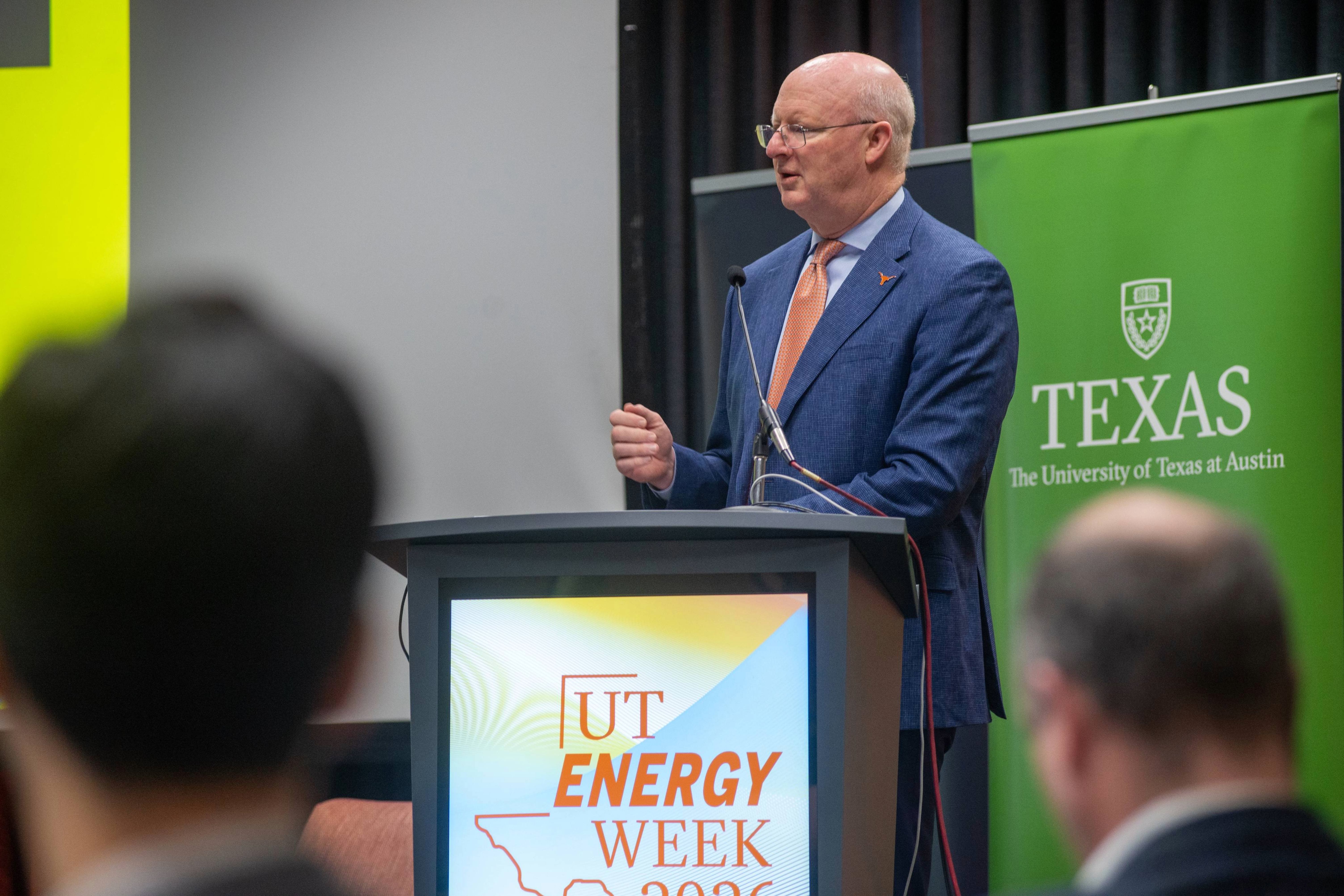
In April, more than 120 attendees from across the U.S. and abroad gathered at The University of Texas at Austin for the Texas Nuclear Symposium. Kicking off the Energy Institute’s annual UT Energy Week, the event featured remarks from Executive Vice President and Provost William Inboden, presentations from faculty, student research posters, and networking opportunities with industry leaders.
The symposium showcased the full scope of nuclear engineering research at UT Austin, with conversation topics ranging from radiation science and medical isotopes to advanced reactor deployment, robotics, digital twins, national security and energy policy. These topics contributed to a forward-looking discussion on the future of nuclear engineering.
Faculty presented work on a range of innovations, including modular robotics for hazardous environments, reactor-produced medical isotopes used in cancer treatment, and configurable imaging systems designed to improve nuclear medicine.
Presentations made by the Texas Nuclear Digital Twin Program demonstrated advancements in reactor digital twins, high-fidelity modeling, simulation, and data-driven tools that can accelerate the design, testing, operations and licensing of next-generation nuclear systems. The program contributed 14 posters featuring ongoing research related to digital twins and advanced nuclear engineering technologies.
“Our researchers are advancing next-generation reactors and fuel cycles, informing energy policy and studying grid integration at scale,” Executive Vice President and Provost William Inboden said in his keynote remarks. “If we get this right, we will do more than meet rising demand. We will strengthen our economy, expand the frontiers of science and medicine in ways that improve lives across our state and beyond, and promote a more peaceful world.”
Nuclear education at UT Austin is growing rapidly as student demand increases at both the undergraduate and graduate levels. The University continues to be a leader in nuclear and radiation engineering, providing expertise, impactful research and real-world solutions while building a workforce for the future.
The 2027 UT Energy Week will be held April 5 to 9. Visit the UTEW 2027 webpage for more details.
