
News
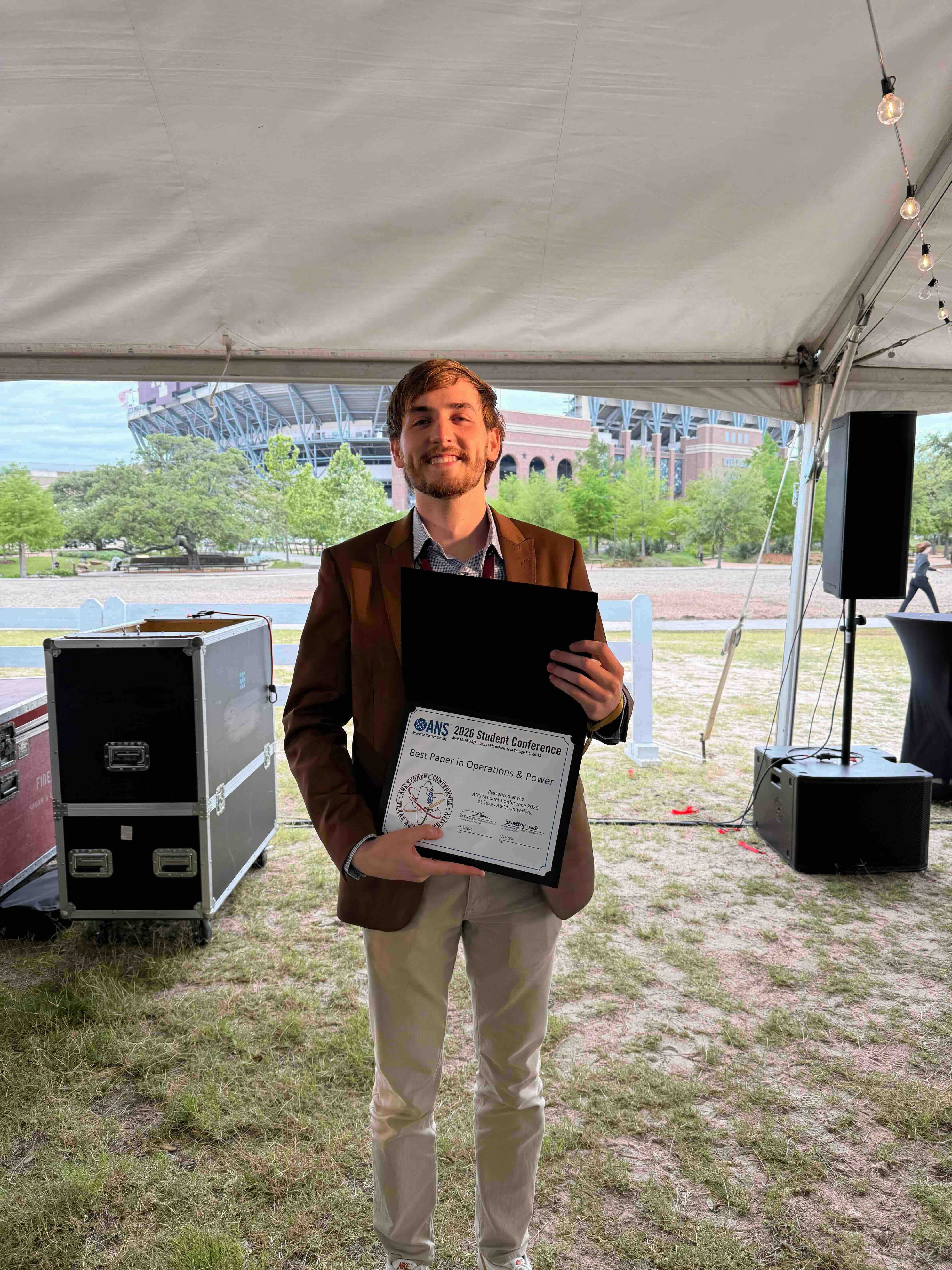
Jeongwon Seo and Sam Queralt won "Best Paper in Operations and Power" for their writing and presentation of "Efficiency Enhancement of Control Rod Worth Calibration in TRIGA Mk-II Reactor using Rod Swap Technique" at the ANS Student Conference in April. While current control rod calibration methods struggle to balance accuracy with efficiency, Rod Swap enables improvements in both. These new findings could be implemented at the university's own TRIGA reactor on the J. J. Pickle Research Campus. Until they are, this paper offers a new perspective on control rod worth calibration and invites further research in to improving the baseline operations of nuclear reactors.
More information can be found about control rod worth here: https://nuclear-twins.tacc.utexas.edu/rod_calibration
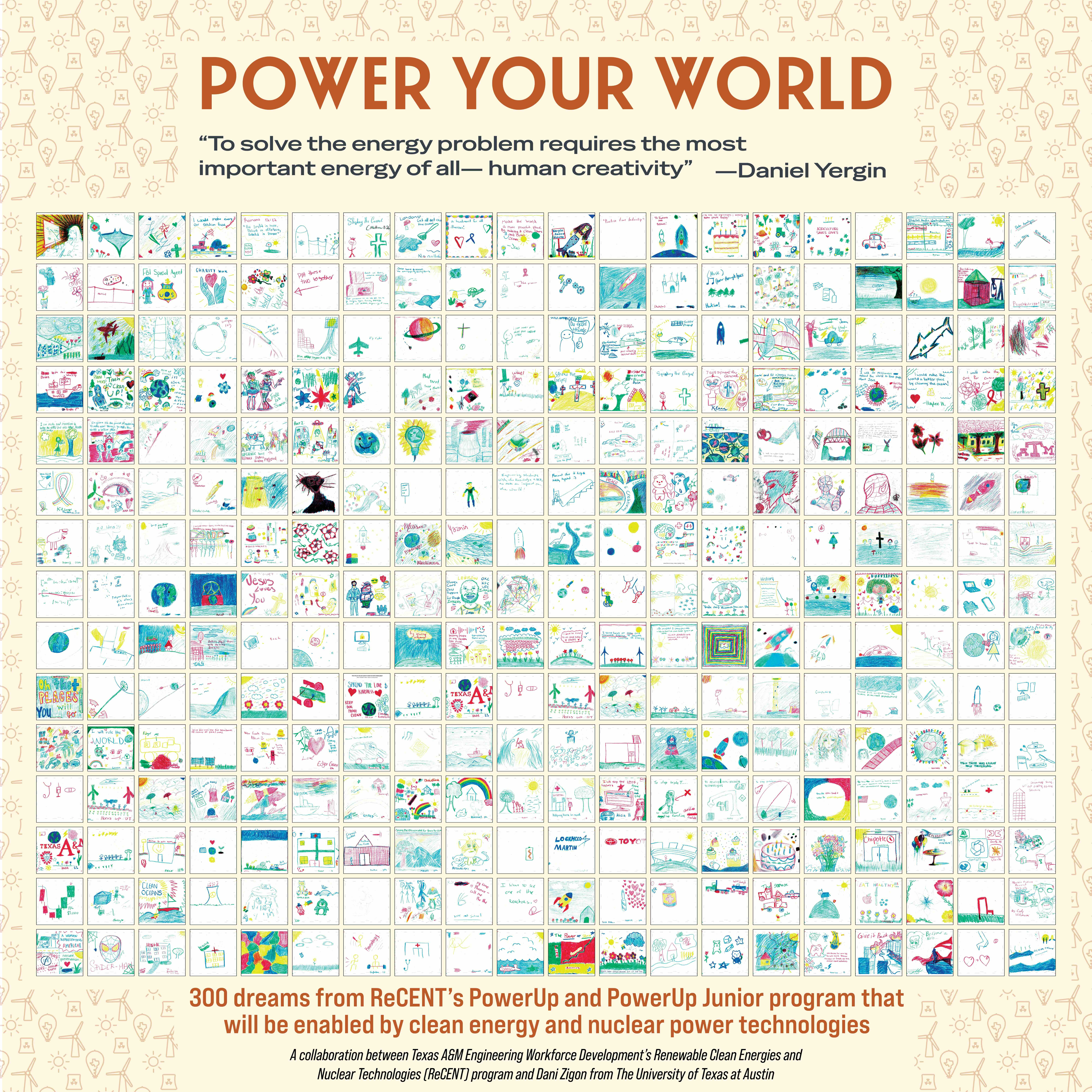
Dani Zigon, Director of Strategic Initiatives for UT Austin's Nuclear and Radiation Engineering Program, delivered the opening keynote at Texas A&M's 2026 ReCENT Summit on April 28–29. The PowerUp program event brought approximately 500 middle and high school students to campus over two days for hands-on exposure to careers in clean energy and nuclear technology.
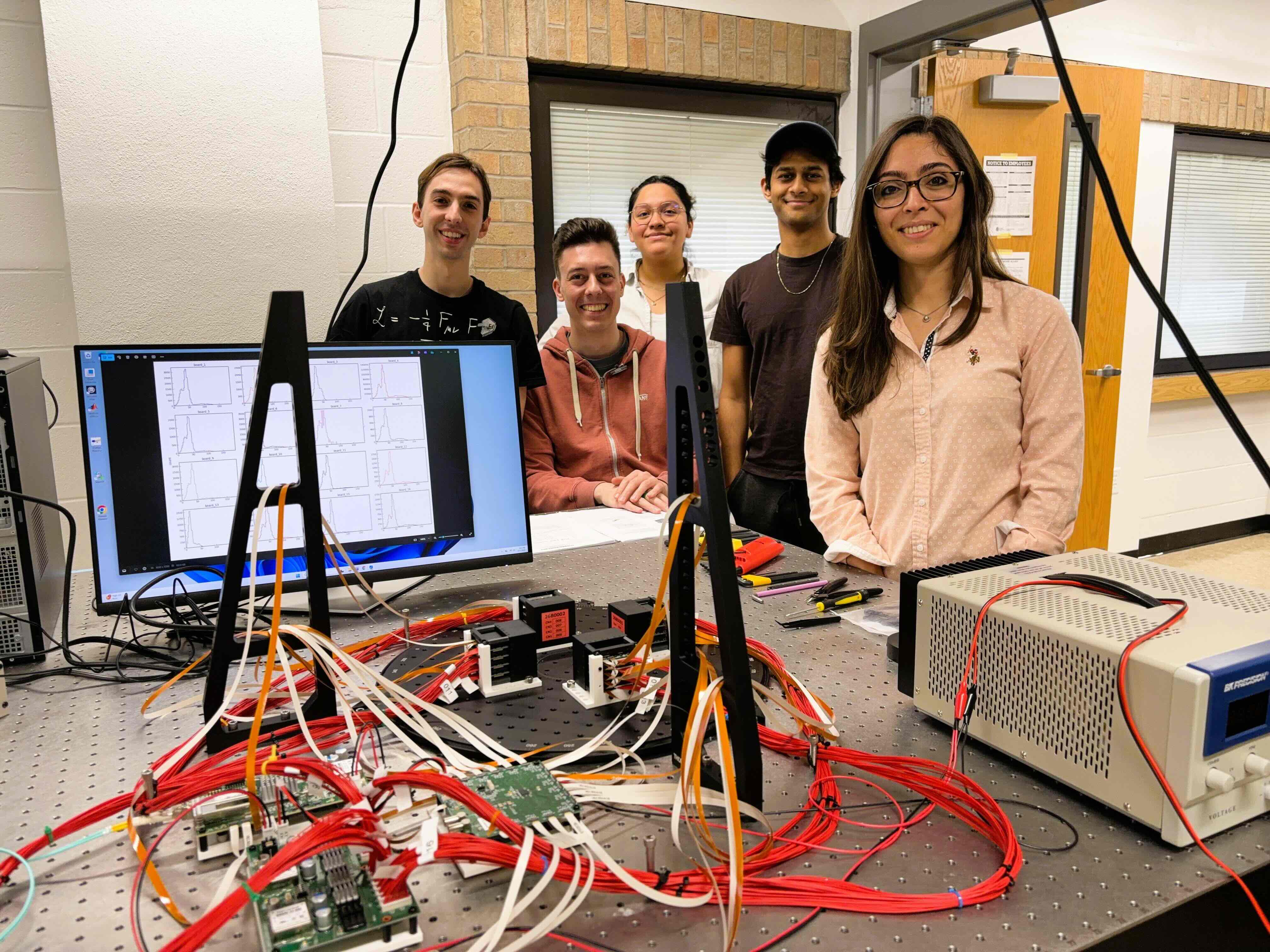
The Translational Radiological Advanced Imaging Laboratory (TRAIL) in the Nuclear and Radiation Engineering Program within the Walker Department of Mechanical Engineering has been awarded a R21 Trailblazer Award from the National Institute of Biomedical Imaging and Bioengineering (NIBIB) of the National Institutes of Health (NIH). The grant will support the development of a novel, robot-assisted SPECT (Single Photon Emission Computed Tomography) imaging system, a project that seeks to redefine how high-resolution functional images of the human body are acquired.
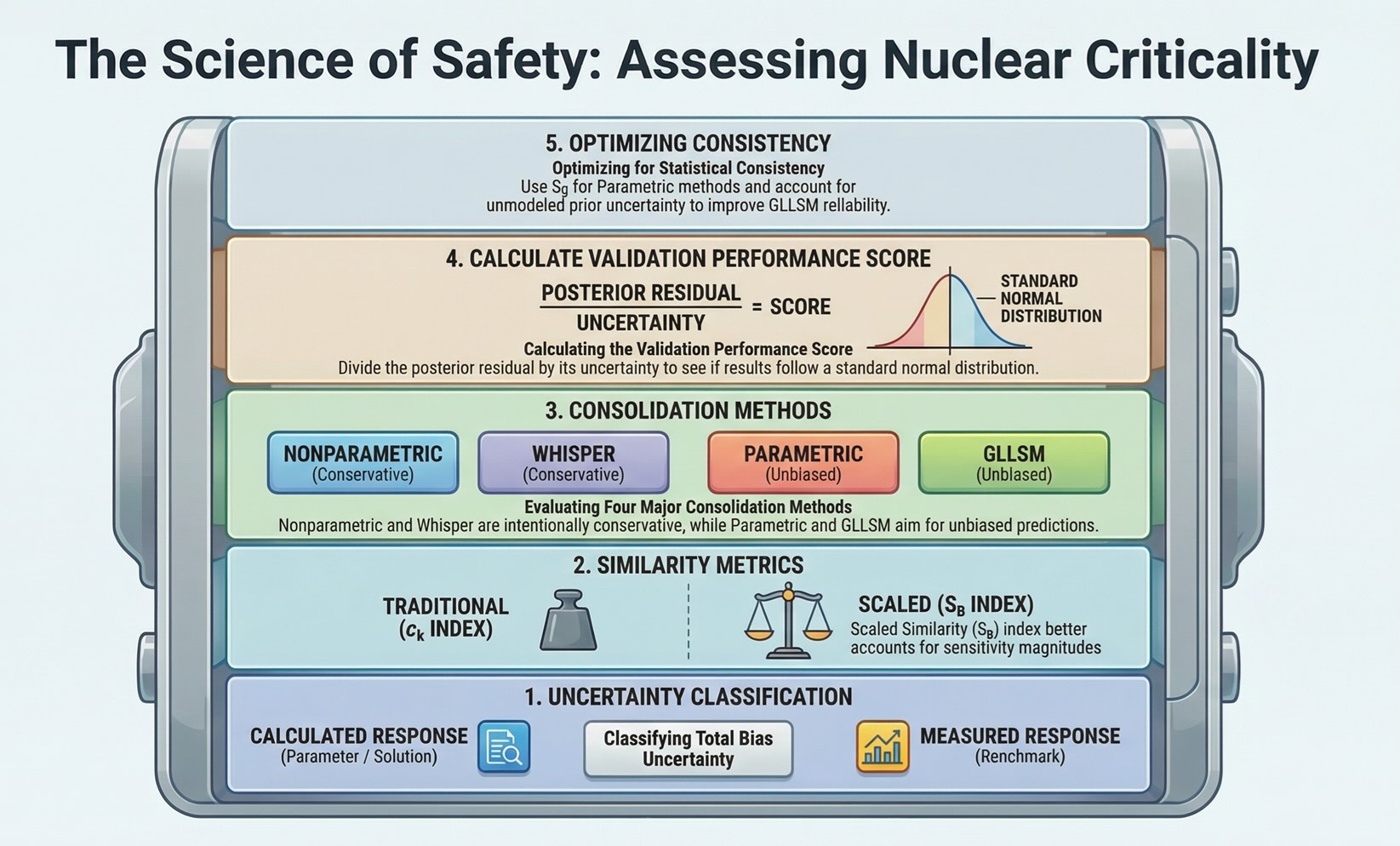
Dr. Jeongwon Seo’s latest paper, "Validation performance assessment through quantitative score focused on benchmark selection for nuclear criticality safety," has been published in Nuclear Science and Technology Open Research. While traditional validation relies on heuristic similarity rules, Dr. Seo introduces a "Score" concept that normalizes prediction residuals by their associated uncertainty. This provides an uncertainty-aware lens to ensure that model predictions are statistically consistent rather than just numerically close.

Nuclear and Radiation Engineering graduate student Braden Pecora has been selected as the 2026–27 Kay Bailey Hutchison (KBH) Computational Energy Fellow, a joint fellowship from the Oden Institute for Computational Engineering and Sciences and the KBH Energy Center at UT Austin.
The fellowship recognizes an outstanding Oden Institute graduate student or postdoctoral fellow who contributes computational science expertise to the educational programming of the KBH Energy Center's Energy Studies Minor.
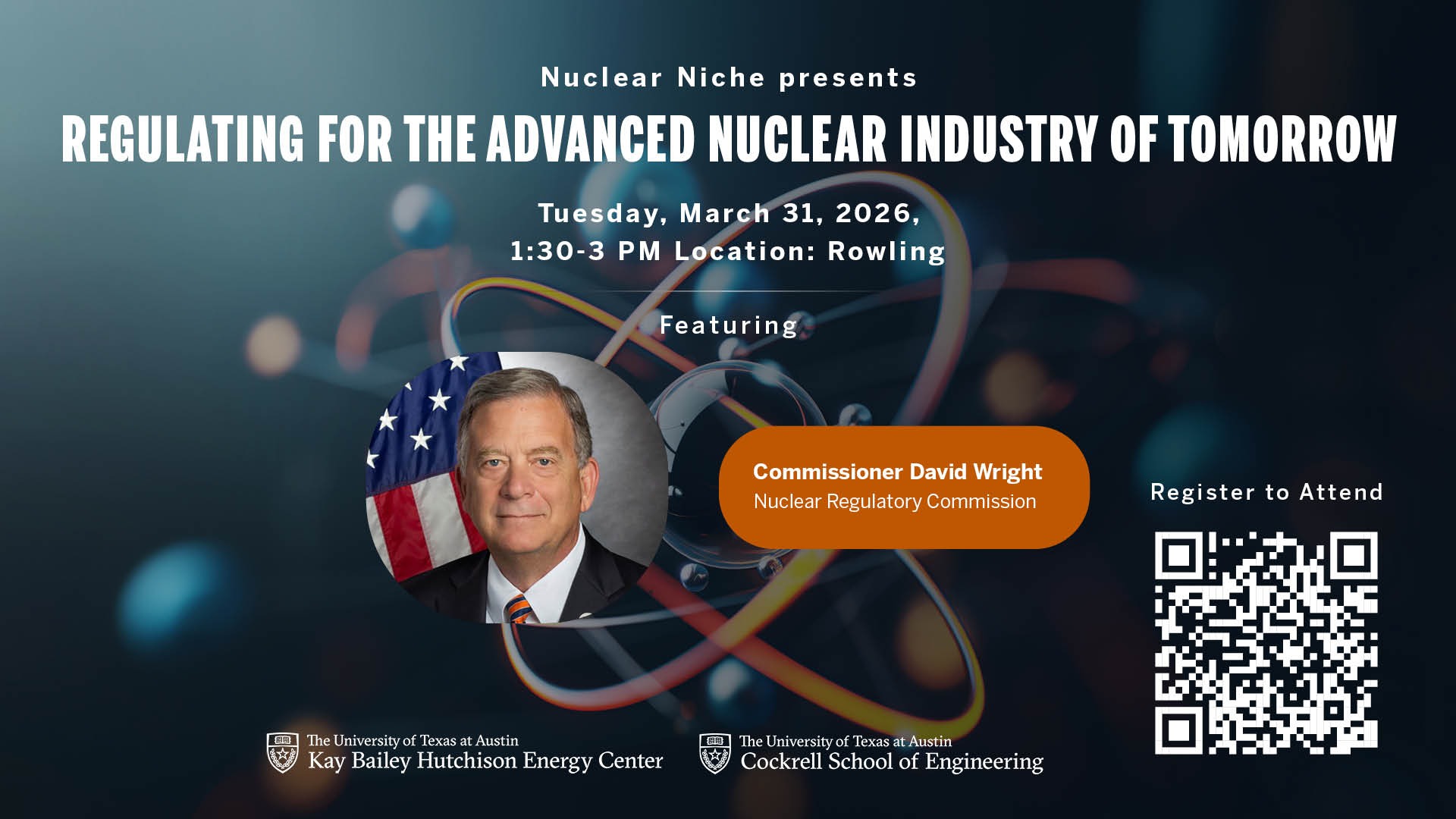
Join the UT Nuclear Niche for an in-person fireside chat with Commissioner David Wright of the Nuclear Regulatory Commission. Use the QR code below or this link to register.
📍 Rowling 5.210
🗓 Tuesday, March 31, 2026
⏰ 1:30–3:00 PM
🍭 Light bites provided
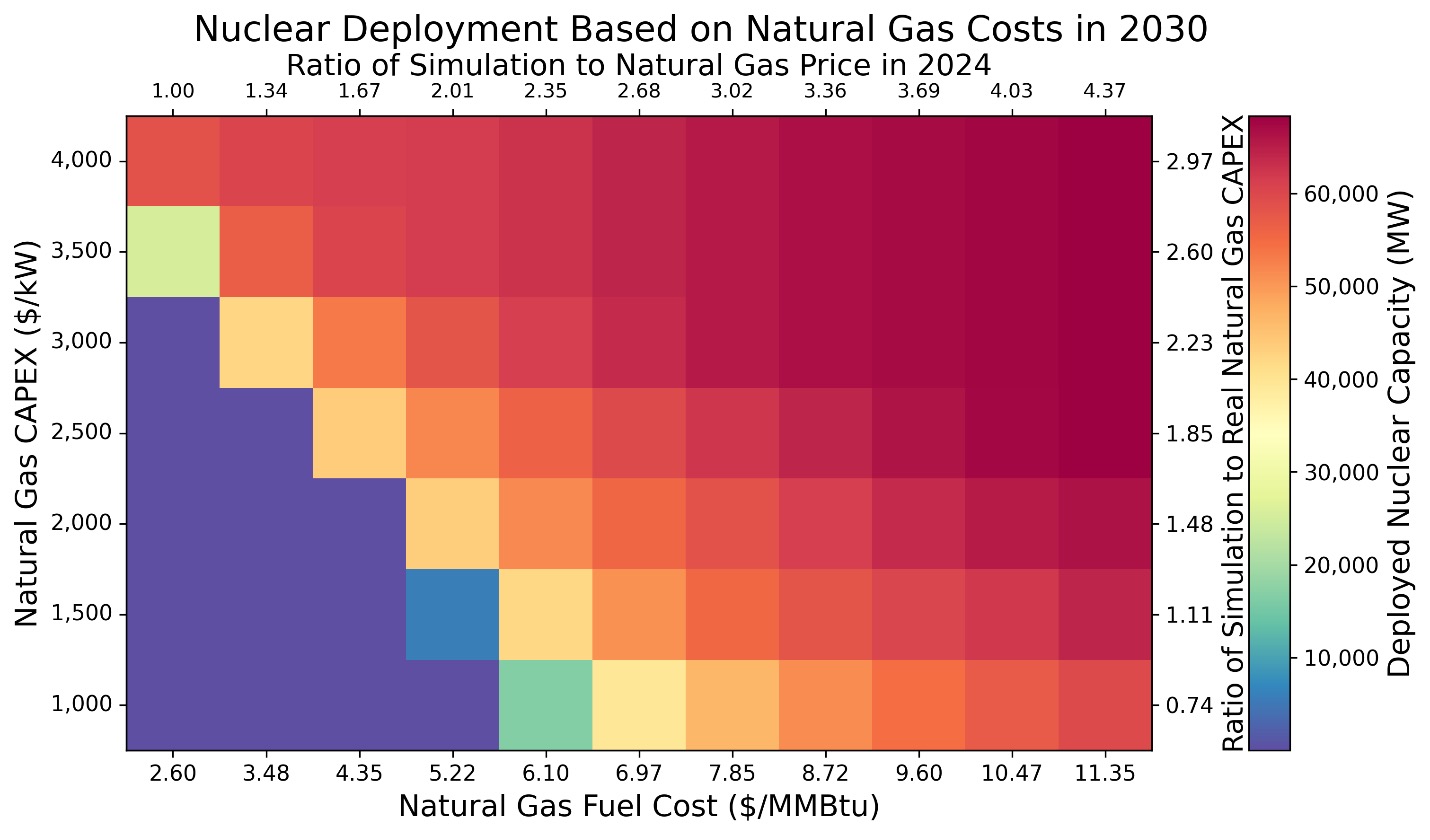
Current PhD student Ivy Seidel published the peer-reviewed paper, Investigating nuclear energy viability in Texas with decision making model GenX, in the journal Energy Economics. This paper focuses on the analysis of the economic viability of Nuclear Power in Texas. Seidel utilized open source capacity expansion model GenX to weigh the cost of unserved energy against the cost of implementing nuclear power in the face of electricity demand growth Texas. ERCOT is expected to experience a dramatic increase in the number of data centers being constructed due to the favorable economic landscape of the state, this would greatly impact industrial power draw and need to be accounted for in the coming years. A sharp rise in power demand along with expected population growth is predicted to cause a near doubling of the average electricity demand in Texas by 2030.
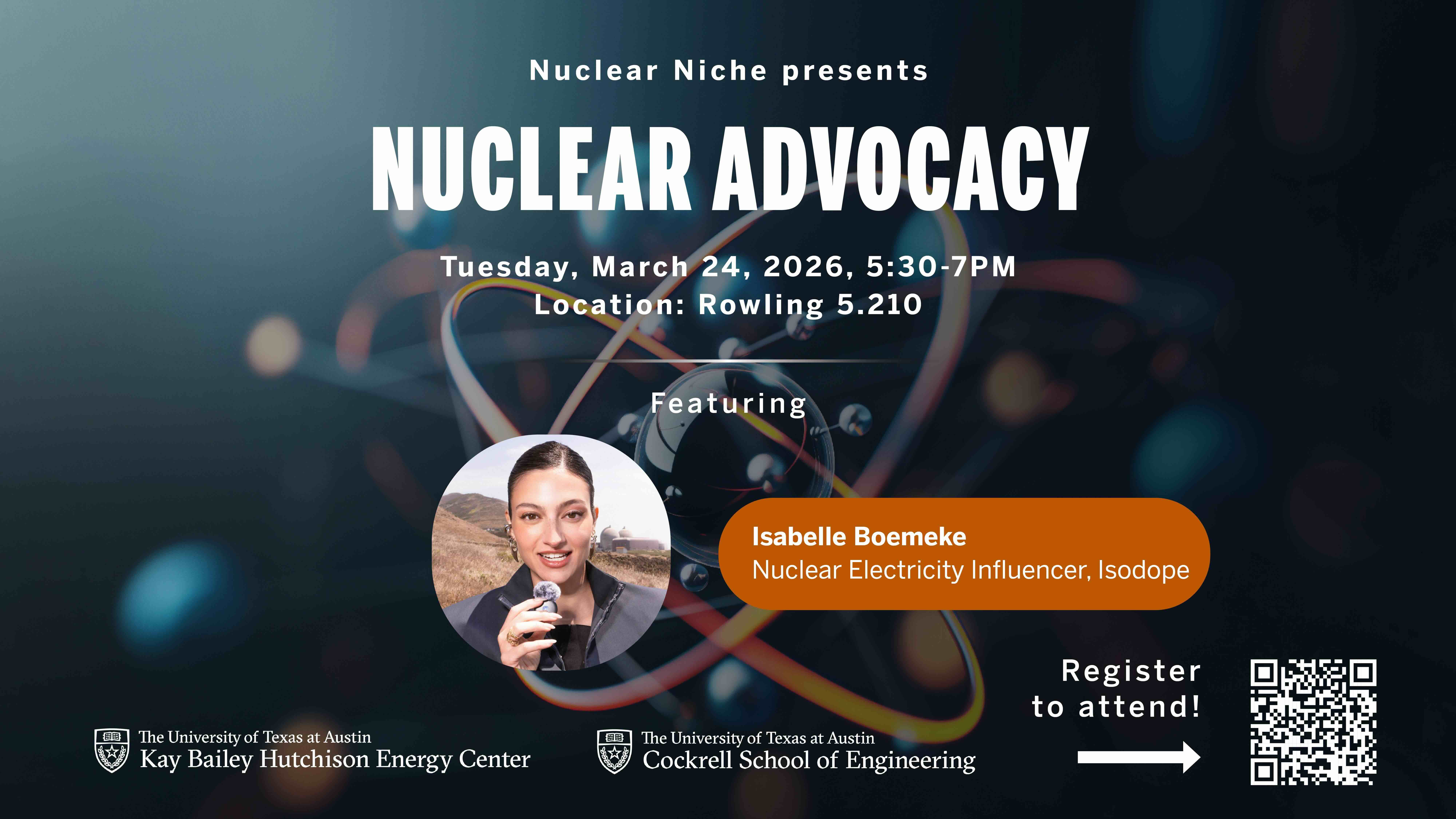
Join the UT Nuclear Niche for an in-person fireside chat with Isabelle Boemeke on Advocacy in the Last Nuclear Renaissance. Use the QR code below or this link to register.
📍 Rowling 5.210
🗓 Tuesday, March 24, 2026
⏰ 5:30–7:00 PM

Dr. Jeongwon Seo's paper, Softmax-Based Deep Neural Network in Regression, was recently published in the Journal of VVUQ. While traditional AI regression models are great at giving a single "average" answer, they often struggle with the messy, unpredictable nature of real-world data.
To overcome this, Dr. Seo's approach borrows a clever tactic from classification: by breaking continuous outputs into discrete 'bins', the model can predict not just a single number, but the entire landscape of probabilities.

Dani Zigon, Director of Strategic Initiatives for The University of Texas at Austin’s Nuclear & Radiation Engineering Program, recently served as moderator and panelist for the Texas Nuclear Alliance (TNA) webinar, “The Path Forward for Cultivating Homegrown Nuclear Talent in Texas.” A full recording can be found on YouTube.
